.png)


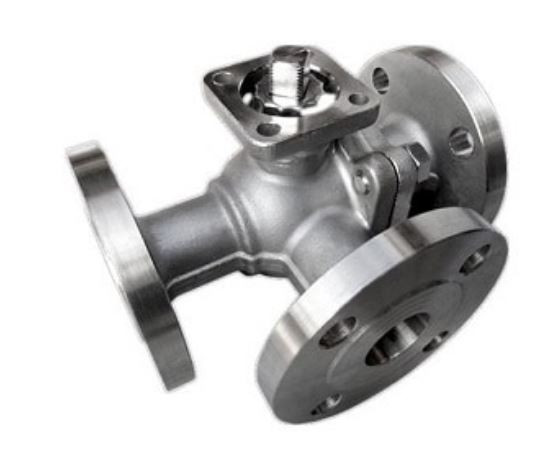
FLOATING BALL VALVE FLANGED END(1PC,2PC,3PC DESIGN)
Introduction
Valves are an integral part of any pipeline system, which is used to control and regulate the flow of system fluid. When it comes to quick shut-off operations of fluids flowing through pipelines and other piping systems in the gas, oil, water, and other industries, a floating ball valve is one of the most common names.One of the most critical design aspects of any valve type is to ensure tight sealing and smooth operation throughout the lifespan. Most floating ball valve manufacturers have focused on these design aspects and offer valves in different configurations and sizes.If you’ve ever wondered, “What is a floating ball valve?” then keep reading because we’ve broken everything down for you. We will explore the construction and operation of floating ball valves in-depth and the variants, strengths, and drawbacks, and their vast range of applications.
What Is A Floating Ball Valve?
The term “floating ball” refers to the hollow, ball-like sphere that “floats” freely within the valve’s body, which gets compressed between the two flexible seats when the valve is operated. In simple words, the ball remains suspended in the fluid without any support structure and is kept in place only by the valve seat.Floating ball valves provide a bi-directional airtight seal, making them ideal for controlling liquid flow such as oil, gas, steam, and water. These valves are normally used in pipelines with low to medium pressure but can even be customized for high-pressure operations.According to most floating ball valve manufacturers, these valves have a compact design compared to other isolating valves, making them ideal for use when space is an issue. Also, being lightweight and economical, they are preferred in many industrial applications.
Floating Ball Valve :
WorkingThe floating ball valves, similar to any ball valve design, are operated by a shaft, or stem, attached to the top of the ball that turns it 90 degrees (a quarter turn). As the ball rotates, the port is covered or uncovered, allowing or blocking the flow of media.The stem is freely linked to the ball such that the pressure of the flow presses the ball against its downstream seat as it turns on its axis, creating a tight seal. This design feature of the valve allows it to operate in either direction of fluid flow.
Classification Of Floating Ball Valve
Floating ball valves are generally classified into three types according to the design of the housing.
One-piece Floating Ball ValveThe body is single forged or cast steel in this valve design, which houses all the moving valve parts. These valves are employed in smaller applications because they are compact and least expensive.
Two-piece Floating Ball ValveThis type of valve has two housing pieces cast together or forged where one piece is always larger than the other, and the moving parts are housed in the larger piece. Such valves are especially suitable for working conditions such as high temperature and high pressure.
Three-piece Floating Ball ValveThe three-piece floating ball valve has three sections from left to right, typically comprising a body and two bonnets. This is the most expensive valve subtype and tends to be larger than other valve types.
Floating Ball Valve : Technical Specifications
Size Range : NPS 2 to NPS 8
Class Range: 150LB to 2500LB
Design Standard : ISO 17292 / API 608 / API 6D
Fire Standard : API 607
End Connection : Flanged; BW; Threaded
Operation : Manual Lever / Pneumatic / Electrical
Floating Ball Valve :
Special FeaturesOver a period of time, floating ball valve manufacturers have adopted various design features to enhance the working and safety standards of these valves. Some of the salient features include :
Integral locking device to stop unintentional operation.
Fire-safe design as per API 607 standards.
Antistatic design feature to make it suitable for flammable and explosive media.
Tight sealing to ensure zero leakage.
Blowout-proof stem design to ensure positive stem retention.
Sealing Arrangement in Floating Ball Valve
Sealing arrangement in a floating ball valve is the key to its effective performance regardless of the material used. So, let us look at some basic seal types used by most floating ball valve manufacturers.
Summary
As discussed in the article, floating ball valves are one of the most widely used in industrial applications. Even though these valves are generally suitable for low to medium pressure applications, floating ball valve manufacturers can customize them for high-pressure operations.
If you’re reading this, we appreciate your time and hope you find the information useful.
For further information about floating ball valves or other product inquiries, please feel free to contact us. You may also leave a comment and share your thoughts with us about our products.
Advantages of Floating Ball Valve
Let us now look at some advantages of floating ball valves.
Lightweight and compact design Cost-effective Customizable Little flow resistance Tight and reliable sealing Easy operation with a fast shutter speed
Disadvantages of Floating Ball Valve
There are certain limitations to the use of floating ball valve, which includes
Complete reliance on downstream seating. High upstream pressure makes operation difficult. Sealing surface can easily get damaged.
Applications Of Floating Ball Valve
There is a wide range of industries and environments in which floating ball valves are used. This includes
Gas processing industry Petrochemical industry Chemical and natural gas industries Offshore and onshore oil and gas wells Transmission lines and storage facilities Other industries where gas or liquids are transported via piping systems.
Soft Seal
The valve seat is embedded in the valve body by a specific press on both the upstream and downstream sides. Mostly used for applications with working conditions below 150° C. Flexible operation and reliable sealing. Material: PTFE, RPTFE, NYLON, PPL, PEEK, etc.
Metal Hard Seal
A seat assembly is installed on the valve’s upstream side, and the sealing surface is coated with carbide. The seat on the valve’s upstream side provides the required initial sealing specific pressure for the valve, while the seat on the valve’s downstream side performs the main sealing. Mainly used in applications with working conditions that include high temperature and the presence of particles, dust, slurry, etc. Reliable sealing even at high temperature and high pressure. Material: Stellite cemented carbide.
Composite seal
Two valve seat components are provided on both the upstream and downstream sides of the valve. Each valve seat component is formed by a valve seat, valve seat ring, and gasket. Metal seal is the main seal that cuts off the majority of the medium and prevents particle contaminants from accessing the soft sealing surface. Soft seal is the secondary seal used to block the medium completely. Mainly used in applications involving media with particles, dust, slurry, and others under normal temperature (below 150℃). Long service life and reliable sealing type. Material: Type of rubber.